Menu
Menu
What is First Communion?

First Communion is considered one of the holiest and most important occasions in a Roman Catholic's life. It means that person has received the Sacrament of the Eucharist, the body and blood of Jesus Christ. Most Catholic children receive their First Communion when they're seven or eight years of age because this is considered the age of reason. Others can receive communion for the first time whenever they've met all the Church's requirements.
In order for anyone to receive communion, that person must be without sin and in a state of grace. Traditionally, young Catholic children will make their first confession, or the Sacrament of Penance, a week before receiving their First Communion. At confession, the child will detail sins and misdeeds to a priest and receive a penance in exchange. The penance is usually several prayers to be recited immediately upon exiting the confessional. Once the child is absolved of sin, she's ready to make her First Communion.
Confession isn't the only requirement for receiving the Sacrament of Holy Eucharist. The Sacrament of Baptism must have been received as well. A child, or any person, who is not baptized cannot receive communion. If the child is baptized, she generally begins studying for First Communion in first grade. Those children who don't attend Catholic school go to religious instruction classes after school or on weekends. In most cases for young children, at least two years of religious education must be undertaken before they can receive communion for the first time.
There's more to a child's first communion than a pretty white dress and a family party. While it is a cause for celebration, that's not what the occasion is about. The event means that the children have studied and understood, to the best of their abilities, the mystery of transubstantiation, the changing of the substance of ordinary bread and wine into the substance of Christ's body and blood. A child should also be able to tell the difference between Eucharistic bread and regular food.
On the day of one's First Communion, and whenever receiving communion thereafter, those partaking must, out of respect for the body and blood of Christ, observe another rule: At least one hour before reception of the sacrament, they must fast, which means they may not eat any food. Taking water and medicine, however, are exceptions. After First Communion, young Catholics must attend church every Sunday, and they are encouraged to receive communion frequently, even weekly. If one has missed Sunday mass without good reason or has committed a mortal sin, that person is expected to go to confession before receiving communion again. Most Catholics go to confession at least once a year, usually during Lent.
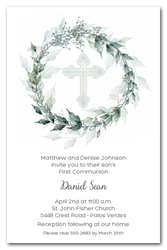
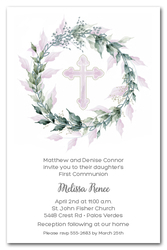
First Communion is a very important and holy day for Catholic children because they are receiving, for the first time, the body and blood of Jesus Christ. By continuing to receive Holy Communion for the rest of their lives, Catholics become one with Christ and believe they will share in His eternal life.
You might also like:
- How to Plan a First Communion Celebration
- First Communion Party Activities
- Shop First Communion Invitations